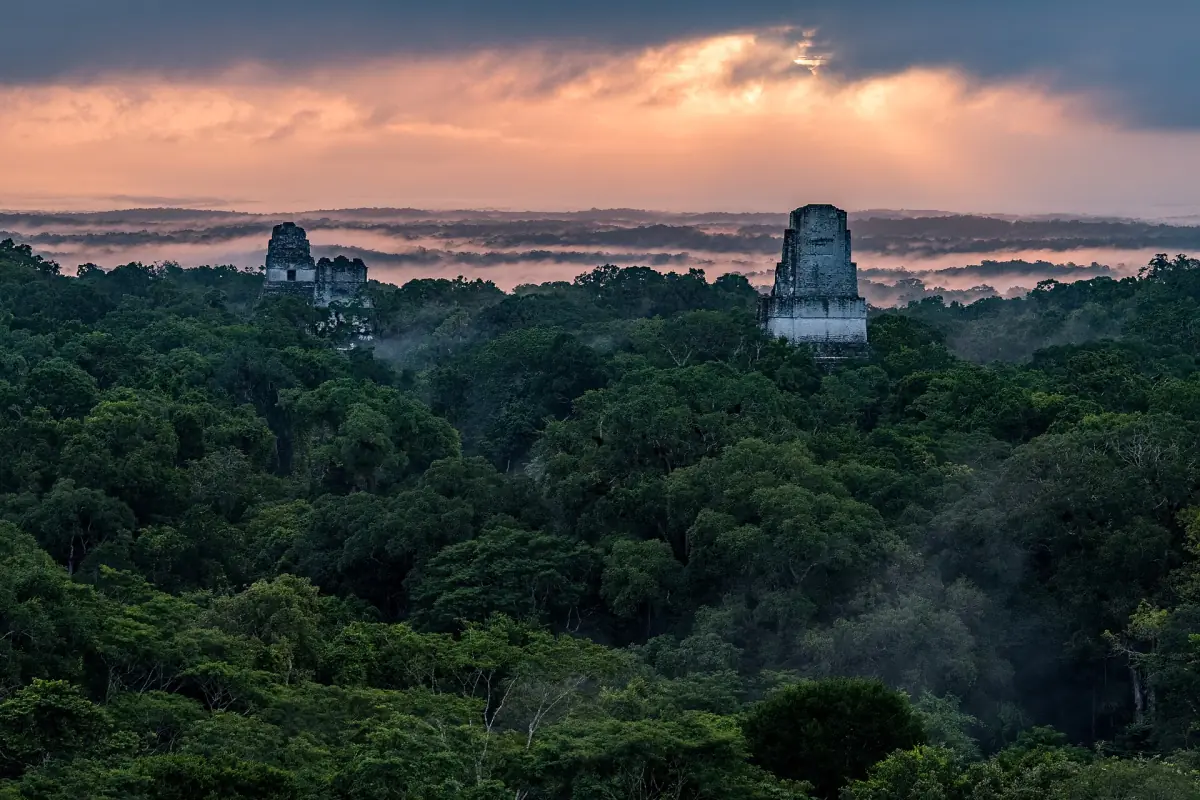
Tikal wildlife at a glance
Tikal National Park is a UNESCO World Heritage Site for its culture and for its nature. The temples stand in tropical forest in the Petén region, and the forest is full of life. Tikal animals include howler monkeys, spider monkeys, coatis, toucans and the ocellated turkey. Jaguars and pumas live here too, but they are rarely seen on a day visit.
The animals are wild and nobody can promise a sighting. What you can plan is a visit that gives you time on the forest paths between the temples. A guided day from Flores, such as one of the Tikal tours from Flores, is the easiest way to combine ruins and forest in one trip.
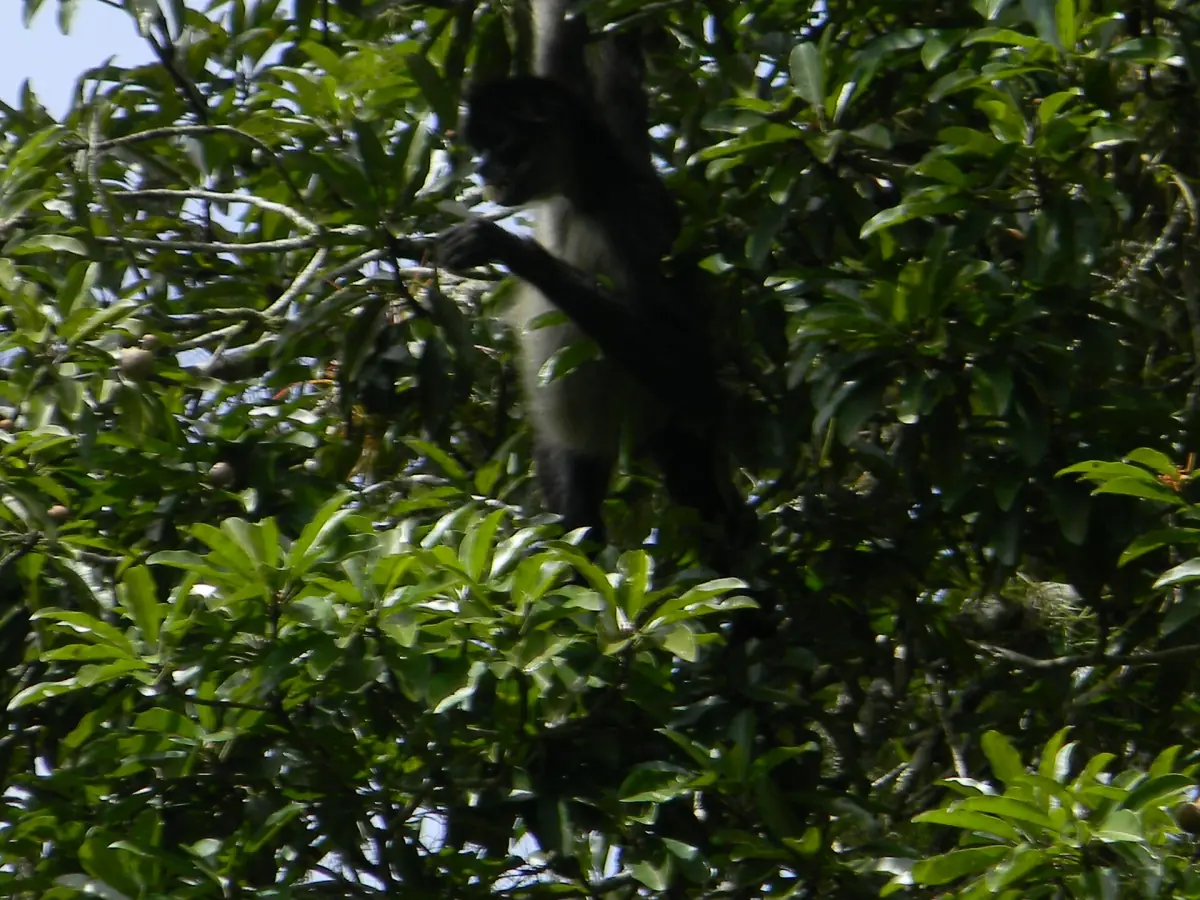
Which animals live in Tikal
Species that live in the park. Living in the park is not a sighting promise.
| Animal | Where to look | Chance to see it |
|---|---|---|
| Howler monkeys | In the trees, often heard first | Possible, not guaranteed |
| Yucatán spider monkeys | In the forest canopy | Possible, not guaranteed |
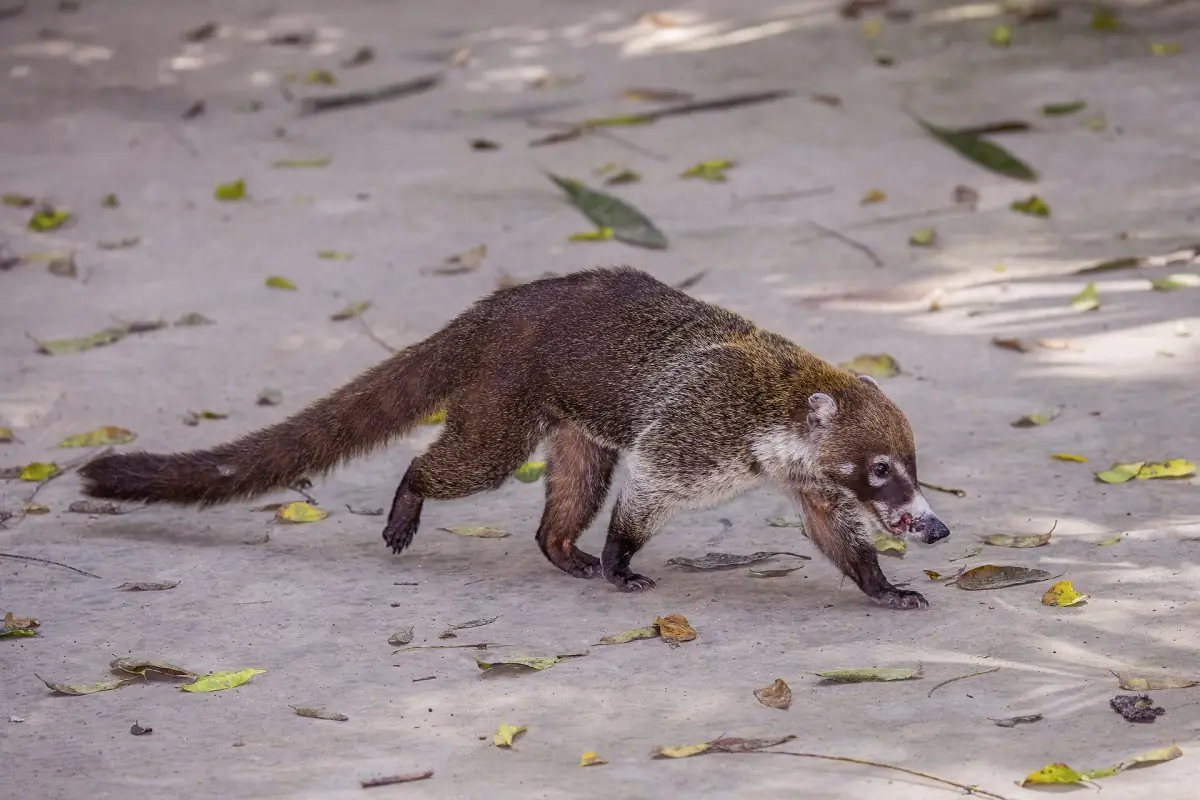
| White-nosed coatis | On the ground along the paths | Possible, not guaranteed |
| Toucans | In the trees and in flight | Possible, not guaranteed |
| Ocellated turkey | Open grass and paths | Possible, not guaranteed |
| Jaguar and puma | Deep forest | Very rare on day visits |
| Birds overall (330+ species) | Everywhere, in the canopy | Sounds and movement are constant |
| Snakes (38 species) | Forest floor | Stay on marked paths |
For most visitors, the right plan is to build the day around the temples and treat the animals as a bonus.
Our pick: wildlife spotting at Tikal
An afternoon and sunset tour with a guide who looks out for animals.
Hand-picked tours, booked through GetYourGuide. Prices are indicative starting prices in US dollars (as of October 2026). Tap a tour for live availability and the current price in your currency.
Tikal tours from Flores
Guided Tikal days from Flores, sunrise trips and more, with live prices and availability.
Howler monkeys, coatis and toucans
Howler monkeys are the animals most visitors notice first, often by their loud calls from the trees. Yucatán spider monkeys live in the park as well. This page uses the general name howler monkeys, because guides use different names for the local species.
White-nosed coatis are animals you may meet on the ground near the paths. Toucans can show up in the trees above them, and the ocellated turkey walks on open grass.
Do not count on any of this to happen at a certain time or place. Give each section of forest a few quiet minutes instead of walking straight between temples.
Birds, snakes and big cats
The larger numbers and the rare animals.
Birds
More than 330 bird species have been recorded in the park. Toucans are the best known, and the ocellated turkey is a common picture from the open areas.
Snakes
The park is home to 38 snake species. Staying on the marked paths is the simple rule here, and it also protects the ruins.
Jaguars and pumas
Both big cats live in the park. Sightings on day visits are very rare. Think of a jaguar as a possibility, not as part of any tour.
Park rules for animals
Short and simple.
Do not feed the animals
Feeding is forbidden in the park. That includes coatis that come close and look for food.
Stay on the marked paths
Respect closed zones, do not damage structures and take your litter with you.
Keep your distance
No fixed distance in meters applies, so use judgment. Never treat a wild animal as tame or harmless, and never approach one to take a photo.
Rain and wet paths
The wetter months run from about May to October, with frequent afternoon rain and slippery paths. From about November to April there is less rain. Both seasons are warm and humid, with temperatures of roughly 24 to 35 °C. See the best time to visit Tikal for more.
Early and late visits
Entry from about 04:00 to 06:00 and from about 18:00 to 20:00 is possible with an extra ticket and an authorized guide. The regular hours are 06:00 to 18:00. Whether you see more animals in those windows is not something anyone can promise. For details, see the Tikal sunrise tour and the Tikal ticket prices.
Plan the rest of your trip
More wildlife, more ruins, and when to go.
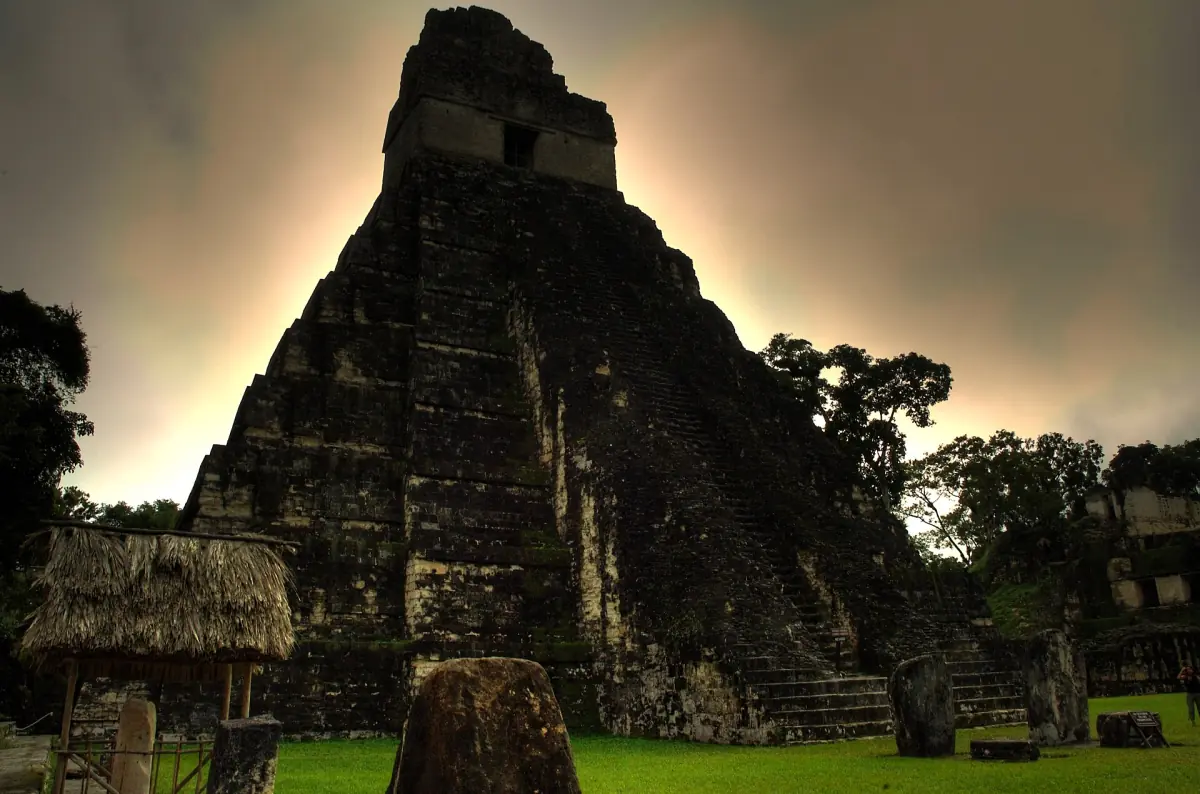
Tikal temples
Temple I, Temple IV and the Great Plaza, with what you can climb.
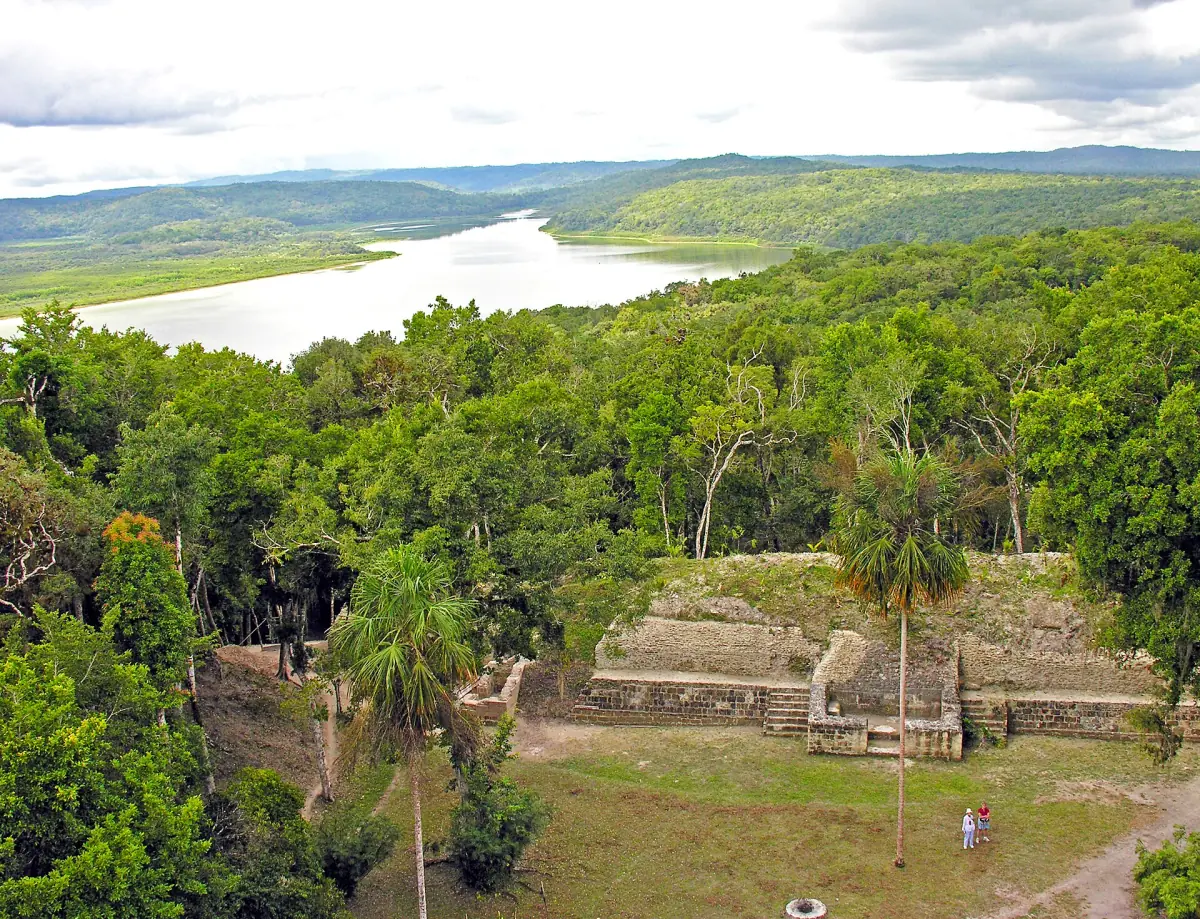
Yaxhá
Ruins above a lagoon, in a protected forest park near Flores.
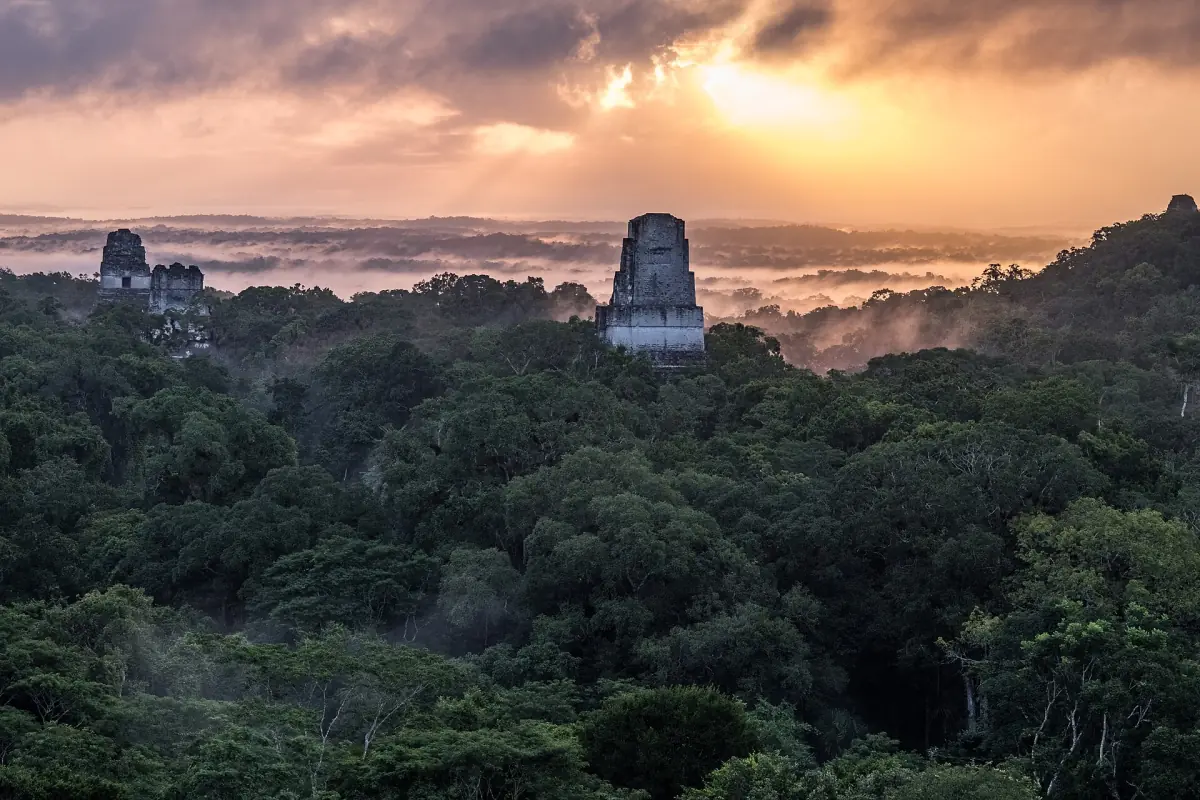
Best time to visit
Rain, heat and what the seasons mean for the paths.
Combining the Petén with the highlands? Antigua has its own guide, as does Lake Atitlán.
Tikal animals: frequently asked questions
Can you see jaguars in Tikal?
Jaguars live in the park, but sightings on day visits are very rare. Plan your visit around the ruins and treat a jaguar as luck.
Are there howler monkeys in Tikal?
Yes. Howler monkeys live in the park, and so do Yucatán spider monkeys.
Can I feed the coatis?
No. Feeding wildlife is forbidden in the park. Keep food out of reach and take your waste with you.
How close can I get to the animals?
There is no fixed distance in meters. Do not approach monkeys, coatis, snakes or big cats, and do not treat any of them as tame.
Do I need a guide to see wildlife in Tikal?
No, a guide is not required for a regular daytime visit. An authorized guide is required for the early and evening visits that need an extra ticket.
Is this the official website of Tikal National Park?
No. TikalRuins.com is an independent travel guide. It is not the official website of the park, of CONAP, of the Ministry of Culture and Sports or of INGUAT, and it is not connected to any tour operator or hotel.